
By Jeremy Hovater
When selling your craft brewery, valuation gets the attention, but deal structure often determines what you actually receive. One of the most important and misunderstood elements is an earnout.
What Is an Earnout
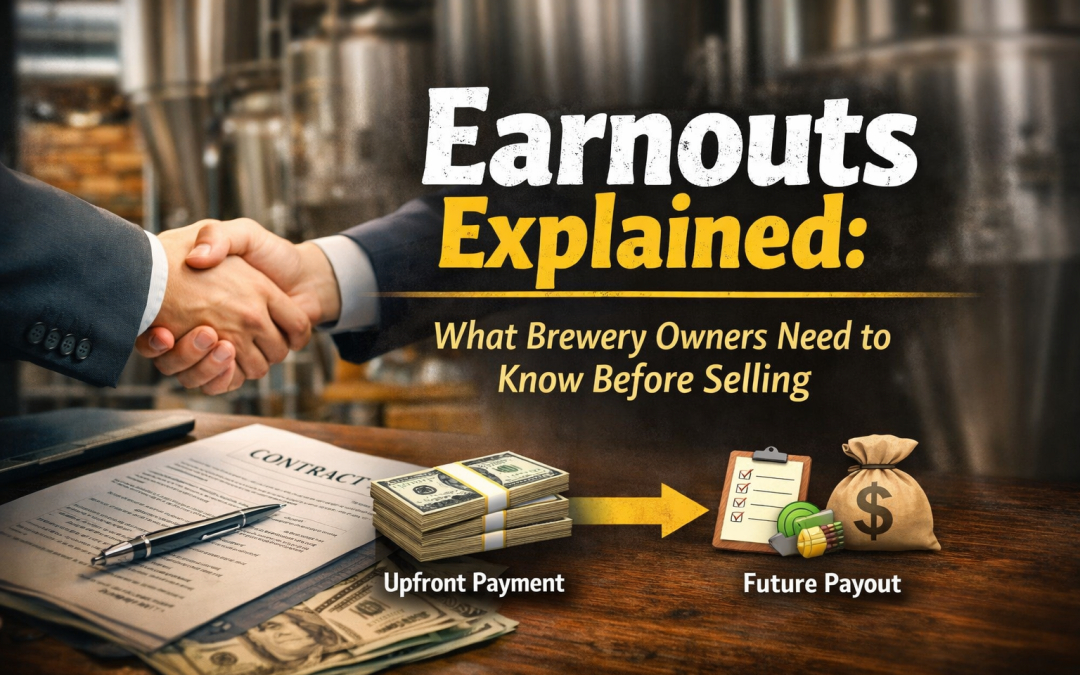
An earnout is a portion of the sale price paid after closing, based on future performance.
Example:
- Total value: $5 million
- Paid at closing: $3.5 million
- Earnout: $1.5 million tied to results
You only receive the earnout if targets are met.
Why Earnouts Are Common Today
Earnouts are increasingly used because:
- Growth has slowed and margins are tighter
- Buyers and sellers have different expectations on future performance
- Many breweries rely heavily on the owner
Earnouts help bridge valuation gaps.
Common Structures
- Revenue based: Simple but ignores profitability
- EBITDA based: More accurate but easier to influence post sale
- Milestone based: Tied to events like expansion or new products
Key Risks
- Loss of control after the sale
- Buyer decisions impacting performance
- Accounting differences
- All or nothing payout structures
How to Protect Yourself
- Use clear, objective metrics
- Negotiate some operational control or defined role
- Avoid all or nothing payouts
- Clearly define financial calculations
- Keep the earnout period as short as possible
Bottom Line
Earnouts are common in today’s market and can help close deals, but not all dollars are equal.
Cash at closing is guaranteed. Earnouts are not.
The right structure can increase your total value. The wrong one can leave you short.